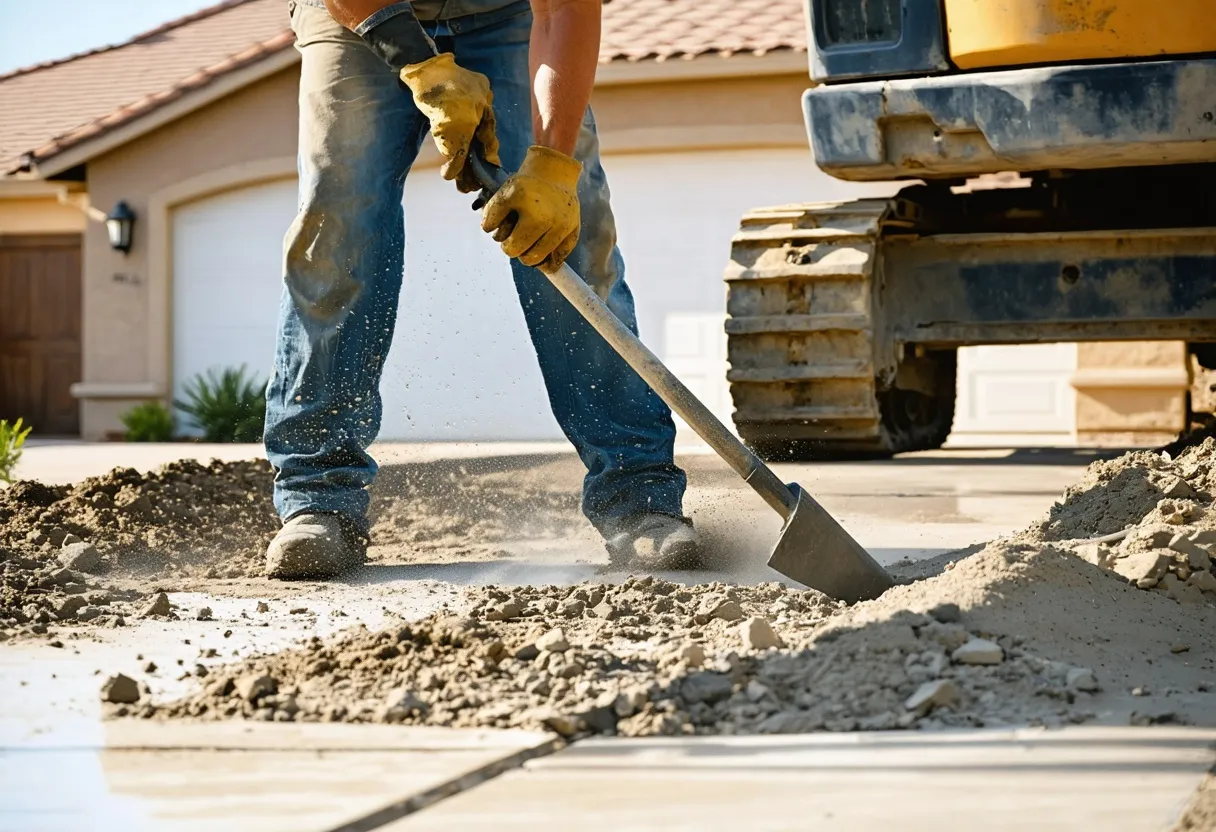
San Tan Valley isn't Gilbert with a different zip code attached. Lots run bigger out there, caliche sits closer to the surface in a lot of subdivisions, and there's less rooftop, fencing, and mature landscaping around a property to slow monsoon wind and runoff down before it reaches your yard. A design that holds up fine in a tighter, established Gilbert lot can still fail in San Tan Valley if grading, base prep, and plant selection aren't adjusted specifically for the site — not treated as an afterthought once the crew shows up.
This page is built around the questions people actually ask before they sign a landscaping contract in this market: what moves the price up or down, what's really covered under a workmanship warranty, whether financing is realistic for a full-yard project, and how a new design survives its first monsoon season instead of needing repair by the second one. Most landscaping websites either avoid these topics entirely or bury them past a lead form. We'd rather answer them here, because a homeowner who understands what's driving their number and what their warranty actually covers makes a better decision — and is less likely to end up back on Google searching for a repair six months later.
Why San Tan Valley's Soil and Storms Change the Plan
What Actually Drives Your San Tan Valley Landscaping Cost
Most landscaping websites take one of two approaches to pricing: publish a flat rate card that ignores your actual lot, or say nothing at all and make you sit through a sales call to find out anything. Neither is honest, because two projects that sound identical on paper — say, a paver patio of a certain size — can land in genuinely different cost ranges depending on what's happening underground and around the site before anyone starts digging.
Site conditions move the number first
Caliche layers close to the surface, sloped or uneven grading, or a lot that needs extra fill to direct water away from the foundation all add excavation and base-prep hours before a single paver or square foot of turf goes down. San Tan Valley's larger, more open lots also tend to mean more linear feet of irrigation line and more base material moved to cover the same visual footprint you'd get on a smaller, more established in-town lot. That's a real cost driver tied to your specific property, not a markup.
Material choice moves it second
Travertine, natural stone, and premium turf blends cost more than concrete pavers or builder-grade turf, and that gap in material cost usually has more influence on your final number than labor hours do. We walk through material options during the same conversation where we talk budget, so you're choosing a look with a real cost attached to it rather than getting surprised by the number once the plan is already drawn.
Irrigation complexity and scope bundling change the math too
More irrigation zones, more plant variety, and more square footage all add valve, line, and controller cost — and it's a mistake to treat irrigation as a small line item on a bigger project, since poorly zoned irrigation is one of the most common reasons new plantings don't make it through their first summer. Separately, combining turf, hardscape, irrigation, and lighting into a single design-build project is typically more cost-efficient than hiring each piece out to a different contractor, since site mobilization and prep get shared across the whole job instead of repeated for every separate crew that shows up.
If a project is large enough that paying for it in one lump sum isn't realistic, we offer financing options for design-build work, and we go over what that looks like for your specific scope directly during the quote — not as a footnote you find after asking twice. We don't publish a flat rate card on this page because doing so across San Tan Valley's range of lot sizes and site conditions would either be so vague it's useless or so specific it's misleading. What we will do is walk your property, point out which of the factors above actually apply to your yard, and put a written cost range in front of you before you commit to anything.
How We Quote and Build a San Tan Valley Project
A designer walks your specific lot to check drainage patterns, sun exposure through the day, and soil conditions, so the budget conversation is grounded in your actual property rather than a phone description.
You get a plan that spells out materials, irrigation zones, and grading work alongside a cost range tied to that specific scope, plus financing details if the project is large enough to justify spreading out payment.
Disruptive work like grading, trenching, and demo happens first while finish work like lighting and planting happens last, and the schedule shifts around forecasted storm cells instead of pushing through them.
Before final walkthrough, we go over exactly what's covered under your workmanship warranty and for how long, broken out by scope, since hardscape, irrigation, and turf each carry their own terms.
Irrigation run times, turf infill, and new plantings often need a check and adjustment during the first year as roots establish, and that follow-up is built into the plan rather than treated as an extra call.
Financing and Warranty, Explained Before You Sign
Every San Tan Valley design-build quote includes financing options for larger projects and a workmanship warranty spelled out in writing, scope by scope, before you sign — not something you find out about after a problem shows up.
Mistakes That Turn Into Warranty Problems Later
A lot of the landscaping problems we get called to look at in San Tan Valley trace back to decisions made — or skipped — before the crew ever left the site the first time. None of these are exotic; they're common shortcuts that save a day of labor now and cost more later.
Skipping base prep to hit a lower bid
Shows up as heaving pavers or wrinkled, gapping turf seams, usually within the first one to two summers as heat expansion and monsoon water exploit a base that was never compacted properly to begin with. It's also one of the most common exclusions buried in a thin or vague warranty, because a contractor who skipped the base prep has no incentive to stand behind the result.
Treating drainage as an afterthought
Grading fixes are far cheaper to plan for before construction than to repair after a monsoon storm floods a patio or washes out a fresh planting bed. On flat, open San Tan Valley lots especially, water that isn't directed away from the house at the design stage will find its own path — usually toward the foundation.
Choosing plants for looks alone
A plant that looks great in a nursery photo may not survive full, direct sun exposure on a west-facing San Tan Valley lot without the right placement and irrigation zoning. Plant failure in the first year is rarely a plant-quality problem; it's usually a placement and watering problem.
Hiring design and construction as two separate jobs
Miscommunication between a designer who never sets foot on-site during the build and a crew working off someone else's plan is one of the most common reasons a finished yard doesn't match what was pitched — and when something goes wrong, each side can point at the other instead of a single company standing behind the whole result.
San Tan Valley Landscaping Questions We Get Most
Is San Tan Valley a regular service area, or an add-on trip?
It's core coverage alongside Queen Creek and Chandler, including the 85295 and E Pecos Rd corridor. Scheduling and pricing don't carry an outer-zone premium because crews are already routing through the area regularly.
Why won't you just give me a price over the phone?
Because two lots that sound the same on a phone call can have very different soil, grading, and access conditions once a crew is standing on them, and quoting blind tends to lead to change orders later. A short on-site walkthrough gets you an accurate range instead of a guess.
How does financing work for a design-build project?
We offer financing options for larger projects so a full-yard renovation doesn't have to be paid in one lump sum. Exact terms depend on project scope, and we go over them directly when we quote your job rather than leaving it as fine print.
What does the workmanship warranty actually cover?
Coverage is broken out by scope — hardscape, irrigation, and turf each carry their own workmanship terms — and we explain exactly what's covered and for how long before you sign, not after installation is already finished.
Will caliche soil or a flat, open lot change my price?
Often, yes. Caliche close to the surface and larger, open San Tan Valley lots can mean more excavation, base material, and irrigation line than a similar-looking project on a smaller in-town lot, and we flag that during the walkthrough rather than after the fact.
Does artificial turf actually hold up to a San Tan Valley summer?
It does when the base compaction and infill are done correctly, which is what keeps the surface from trapping excess heat or pooling water during monsoon storms. A rushed install without proper base prep is where most turf problems start.
Service Area: San Tan Valley, Queen Creek, Chandler, and the 85295 Corridor
San Tan Valley sits east of the Gilbert-Chandler corridor, and treating it as a standard part of the coverage area — rather than a special trip — is part of how we keep pricing consistent. Crews already run jobs across San Tan Valley, Queen Creek, and Chandler in the same week, so a project near the 85295 zip code or the E Pecos Rd corridor gets the same scheduling priority and the same material suppliers as a job closer to central Gilbert.
That matters for cost transparency specifically: a company based well outside San Tan Valley sometimes prices in extra drive time or treats the area as an overflow market, and that shows up as a quiet premium on the quote. Because this is core territory for us, the number you get reflects your site conditions and scope — not your distance from a home office.
What that looks like on the ground
- Same crews and material suppliers across San Tan Valley, Queen Creek, and Chandler
- No outer-zone scheduling delay for the 85295 / E Pecos Rd corridor
- Design plans built around caliche soil and open-lot drainage from the first sketch, not adjusted on-site after a problem shows up
If you're comparing quotes from a few different companies, it's worth asking directly whether San Tan Valley is regular territory for them or an occasional trip — the answer tends to show up later, in how quickly they can schedule a warranty visit if something needs a follow-up look.